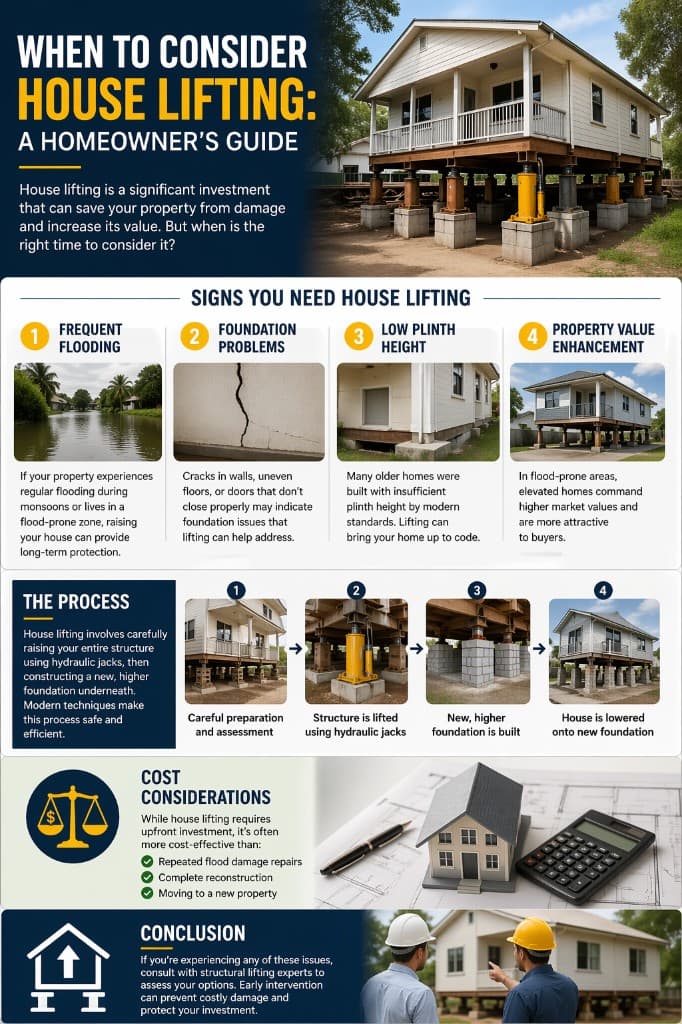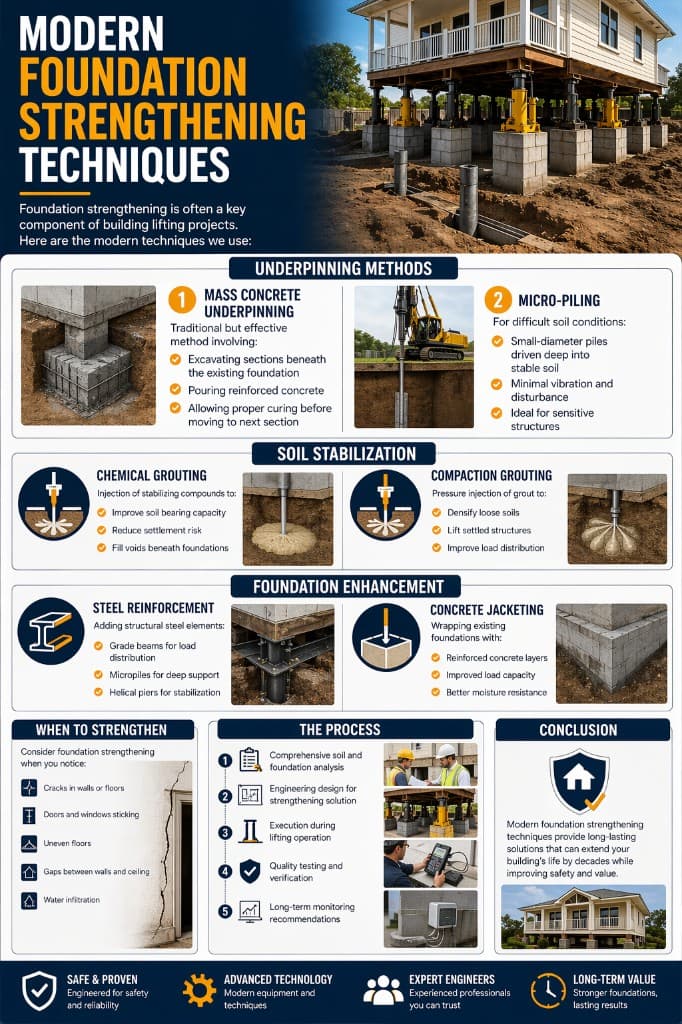
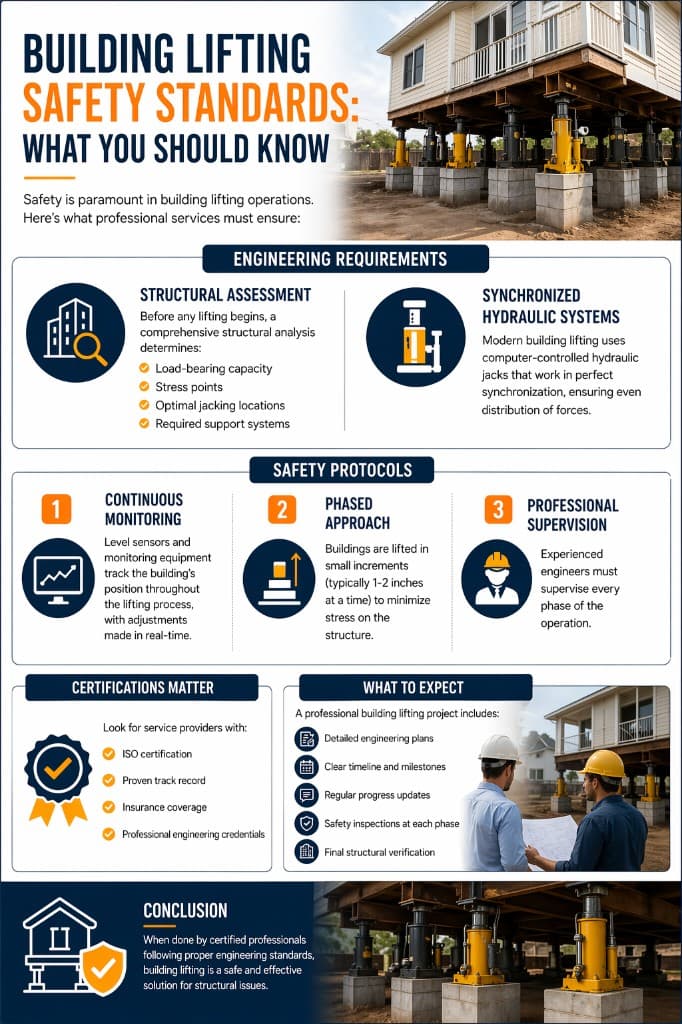
Safety is paramount in building lifting operations. The work itself is established and proven — but the gap between a professionally executed lift and a risky one comes down to engineering discipline. Here's what every reputable service provider must ensure on site.
Engineering Requirements
Structural Assessment
Before any lifting begins, a comprehensive structural analysis is carried out to determine:
- Load-bearing capacity of every column and load path.
- Stress points where extra support or reinforcement is needed.
- Optimal jacking locations across the footprint.
- Required temporary support systems and cribbing layouts.
Synchronized Hydraulic Systems
Modern building lifting uses computer-controlled hydraulic jacks that work in perfect synchronization. This is what guarantees an even distribution of forces across the structure — and what prevents the localized stresses that can crack walls or twist a slab.
Safety Protocols
1. Continuous Monitoring
Level sensors and monitoring equipment track the building's position throughout the lifting process. Any deviation from the planned profile is corrected in real time, not at the end of the day.
2. Phased Approach
Buildings are lifted in small increments — typically 1–2 inches at a time — to keep stress on the structure within safe limits and to allow continuous inspection between cycles.
3. Professional Supervision
Experienced engineers must supervise every phase of the operation. The crew on site executes the lift; the engineer on site is the one accountable for the safety of every decision.
Certifications Matter
When you're choosing a service provider, look for:
- ISO certification and documented quality processes.
- A proven, photographic track record of similar projects.
- Active insurance coverage for the lift itself and for surrounding properties.
- Professional engineering credentials on the senior team.
What to Expect
A professional building lifting project always includes:
- Detailed engineering plans with drawings and calculations.
- A clear timeline with named milestones.
- Regular progress updates to the owner, in writing.
- Safety inspections at each phase of the lift.
- Final structural verification and a sign-off report.
The safest lift is also, almost always, the most boring one to watch — small steady increments, continuous measurement, no surprises.
Conclusion
When done by certified professionals following proper engineering standards, building lifting is a safe, repeatable and effective solution for a wide range of structural issues. Cutting corners on the engineering is what creates the horror stories — never the lifting itself.